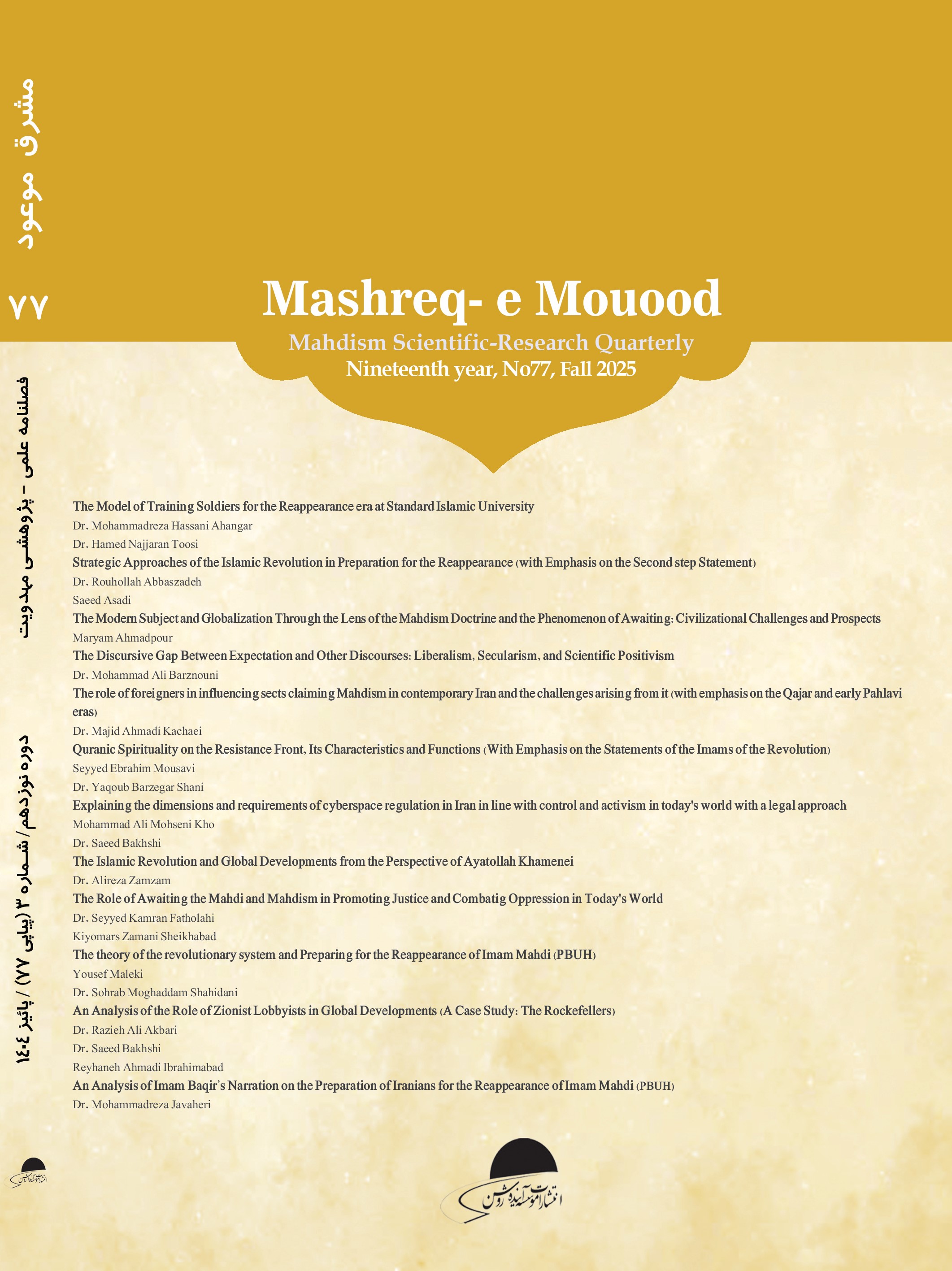
The Role of the Concept of Waiting and Mahdism in the Spread of Justice Oppression in Today's World
Document Type : original research
Authors
1
Assistant Professor, Department of International Law, Faculty of Social Sciences, Imam Hossein University, Tehran, Iran
2
PhD student in Public Law, Faculty of Social Sciences, Imam Hossein University, Tehran, Iran
Abstract
The concept of waiting and Mahdism, as one of the fundamental principles of Shiite thought, plays an important role in the spread of justice and anti-oppression. This doctrine emphasizes the hope for the emergence of Imam Mahdi (PBUH) as the promised savior and the establisher of global justice. Waiting is not just a passive state; rather, from an Islamic perspective, it is a social responsibility that encourages individuals to strive to establish justice and confront oppression at every level of society. In today's world, where social inequalities, corruption, and oppression have spread in various dimensions, the idea of Mahdism can be a motivation to resist oppression and strengthen human values. The promised waiting gives individuals and societies the message that oppression and injustice will never last and that the realization of justice is an achievable goal. From a practical perspective, this thought paves the way for the active presence of humans in social and political arenas, because true expectation means preparation for the emergence of the savior and the creation of a just society. Therefore, Mahdism and expectation, as hopeful concepts, lead humans to fight injustice and strive to improve global conditions. This doctrine can accelerate convergence among nations and the creation of a global discourse for peace, justice, and human dignity. In sum, Mahdism, as a timeless idea, is a powerful tool for strengthening the spirit of justice and anti-oppression in the contemporary world.
Keywords
منابع
قرآن کریم
نهجالبلاغه
- ابن بابویه، محمدبن علی(۱۳۹۵ق)، کمالالدین و تمامالنعمه، تحقیق: علیاکبر غفاری، قم: انتشارات دارالکتب الاسلامیه، دوم.
- جوادی آملی، عبدالله(۱۳۸۰)، انتظار در قرآن و حدیث، قم: مرکز نشر اسراء.
- جوهری، اسماعیل بن حماد(۱۴۰۷ق)، الصحاح تاج اللغه و صحاح العربیه، تحقیق: احمد عبدالغفور عطار، بیروت: انتشارات دارالعلم الملایین.
- حسینی خامنهای، سیدعلی(۱۳۶۸)، بیانات در دیدار جمعی از پاسداران سپاه انقلاب اسلامی و کمیتههای انقلاب اسلامی.
- حسینی خامنهای، سیدعلی(۱۳۶۸)، بیانات در دیدار مسئولان و کارگزاران نظام.
- حسینی خامنهای، سیدعلی(۱۳۶۸)، سخنرانی در خجسته سالروز ولادت امامزمان؟عج؟.
- حسینی خامنهای، سیدعلی(۱۳۷۷)، بیانات در دیدار مسئولان دستگاه قضایی.
- حسینی خامنهای، سیدعلی(۱۳۹۵)، بیانات در دیدار با اعضای اتحادیه جهانی علمای مقاومت.
- حسینی خامنهای، سیدعلی(۱۳۹۸)، بیانات در دیدار رئیس و مسئولان دستگاه قضایی.
- حسینی خامنهای، سیدعلی(۱۳۹۹)، سخنرانی تلویزیونی به مناسبت ولادت امام زمان؟عج؟.
- حسینی واسطی زبیدی حنفی، سید محمدمرتضی(۱۴۱۴ق)، تاج العروس من جواهر القاموس، تحقیق: علی شیری، بیروت: انتشارات دارالفکر للطباعة و النشر و التوزیع.
- خسروپناه، عبدالحسین(۱۳۸۹)، مهدویت و تمدنسازی، قم: پژوهشگاه فرهنگ و اندیشه اسلامی.
- شریعتی، علی، (۱۳۵۱)، انتظار، مکتب اعتراض، تهران: حسینیه ارشاد.
- صمدی، قنبرعلی(۱۳۸۸)، «آموزه انتظار و زمینهسازی ظهور»، مشرق موعود، سال سوم، شماره 11.
- طاهری، حبیبالله(۱۳۸۰)، سیمای آفتاب، قم: انتشارات زائر، اول.
- طباطبایی، سید محمدحسین(۱۴۰۲ق)، المیزان فی تفسیر القرآن، قم: دفتر انتشارات اسلامی.
- کورانی عاملی، علی(۱۴۱۱ق)، معجم احادیث الامام المهدی؟عج؟، قم: مؤسسة المعارف الاسلامیه، اول.
- مطهری، مرتضی(۱۳۵۶)، حکومت جهانی مهدی، تهران: انتشارات صدرا.
- مطهری، مرتضی(بیتا)، قیام و انقلاب مهدی؟عج؟ از دیدگاه فلسفه تاریخ، قم: انتشارات صدرا.
- موسوی خمینی، سید روحالله(۱۳۶۰)، ولایت فقیه، تهران: انتشارات مؤسسه تنظیم و نشر آثار امام خمینی؟ره؟.
- موسوی خمینی، سید روحالله(۱۳۶۸)، کشف الاسرار، تهران: سازمان مدارک انقلاب اسلامی.
- موسوی خمینی، سید روحالله(۱۳۶۹)، صحیفه نور، تهران: سازمان مدارک انقلاب اسلامی.