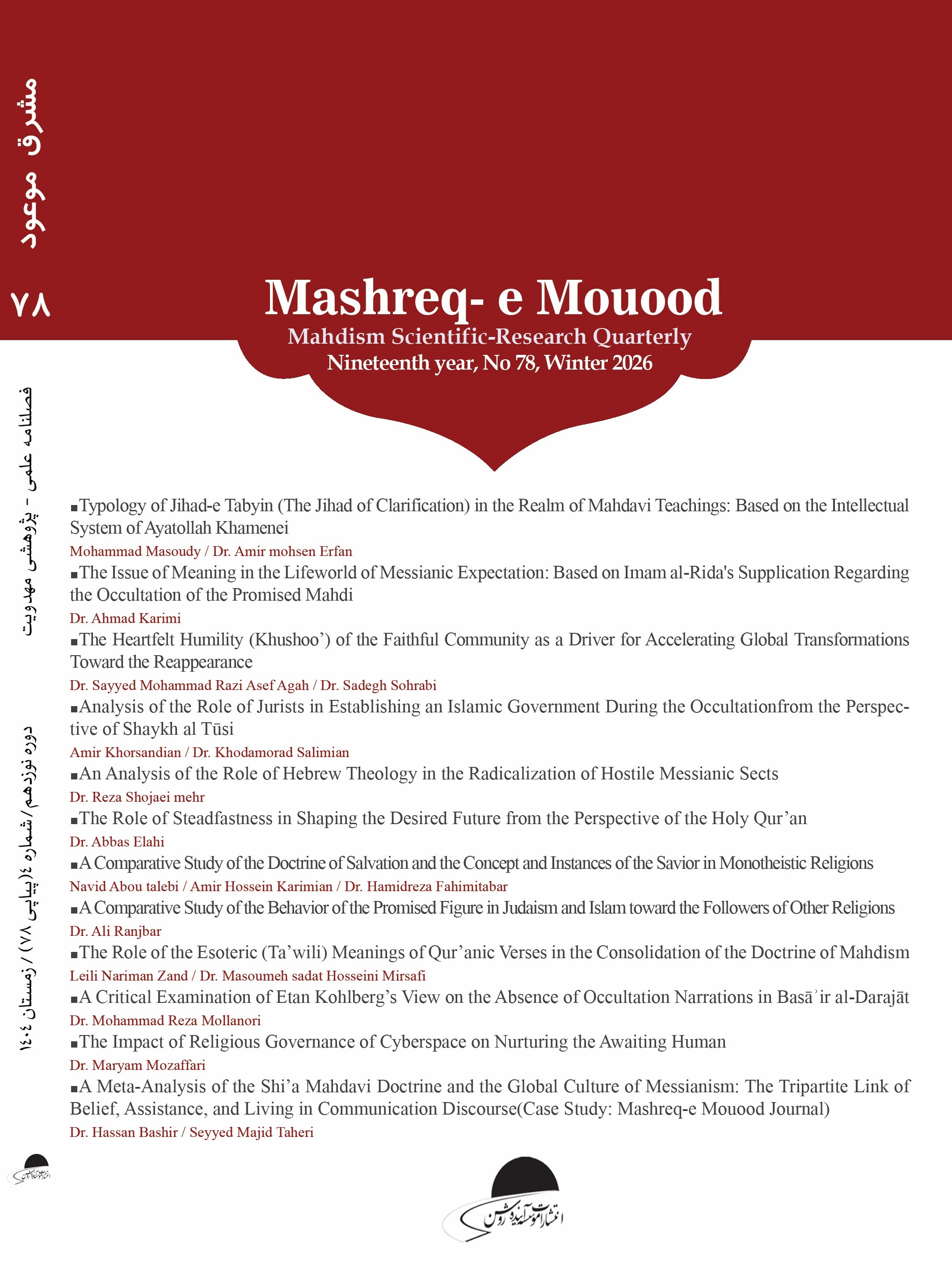
A Comparative Study of the Behavior of the Promised Figure in Judaism and Islam toward the Followers of Other Religions
Document Type : original research
Author
PhD in Religions and Mysticism, Imam Khomeini Educational and Research Institute, Qom, Iran
Abstract
In the texts and teachings of both Judaism and Islam, there is a promise regarding the advent of an individual in the End of Days (ākhir al-zamān) who will emerge as a savior, whose religion will prevail over all other faiths, and who will fill the world with justice and equity. The question that arises here is: how will the promised savior of these religions behave towards the followers of other faiths? In this study, the behavior of the promised saviors in both Judaism and Islam towards the followers of other religions is comparatively investigated. The findings indicate that the Jewish promised savior, known as the Messiah (Māshīaḥ), upon his advent and the establishment of his government, will initially invite all of humanity to the Mosaic Law. The majority of people, due to the knowledge and insight they acquire, will accept this invitation. However, individuals who reject this call and engage in hostility towards the Jews will be eliminated by the Messianic government. Similarly, the Islamic promised savior, [Imam Mahdī], at the beginning of his advent, will invite all people to Islam by demonstrating its truth. Most people, as a result of this enlightenment, will accept his invitation and embrace Islam. Those who reject Islam and exhibit hostility towards Muslims will be killed. Therefore, the behavior of the promised saviors in Judaism and Islam towards the followers of other religions bears a striking resemblance. Each of the two promised saviors, after presenting the proofs of the truth of their religion and finalizing the conclusive argument, will eliminate the polytheists (mushrikūn) and their other enemies. From this similarity in behavior, it can be concluded that the promised savior in Judaism is the very same promised savior in Islam.
Keywords
منابع
- آبراهام کهن، (۱۳۹۰)، گنجینهای از تلمود، (امیر فریدون گرگانی، مترجم)، اساطیر. (اثر اصلی در سال 1887م منتشر شده است)
- اَلن، آنترمن، (۱۳۹۳)، باورها و آئین هاییهودی، (رضا فرزین، مترجم)، انتشارات دانشگاه ادیان و مذاهب. (اثر اصلی در سال 1996م منتشر شده است)
- ابن بابویه، محمدبن على، (۱۳۸۵ق)، علل الشرائع، کتابفروشى داورى.
- ابن بابویه، محمدبن على، (۱۳۹۵ق)، کمال الدین و تمام النعمه، اسلامیه.
- توفیقی، حسین، (۱۳۸۴)، آشنایی با ادیان بزرگ، مؤسسه فرهنگی طه.
- جوادی آملی، عبدالله، (۱۳۸۹)، تفسیر موضوعی قرآن، (علی اسلامی، محقق)، اسری.
- حلى، حسن بن سلیمان بن محمد، (۱۴۲۱ق)، مختصر البصائر، (مشتاق مظفر، مصحح)، مؤسسه النشر الإسلامی.
- صافی گلپایگانی، لطف الله، (۱۳۹۲)، عقیده نجاتبخش، دفتر تنظیم و نشر آثار آیتالله صافی گلپایگانی.
- عیاشى، محمد بن مسعود، (۱۳۸۰) تفسیر العیاشی، (سیدهاشم رسولى محلاتى، مصحح)، المطبعة العلمیه.
- قمى، على بن ابراهیم، (۱۴۰۴ق)، تفسیر قمی، (طیّب موسوى جزائرى، مصحح)، دارالکتاب.
- گرینستون، جولیوس، (۱۳۸۷)، انتظار مسیحا در آئین یهود، (حسین توفیقی، ترجمه)، مرکز مطالعات و تحقیقات ادیان و مذاهب.
- کلینى، محمدبن یعقوب، (۱۴۰۷ق)، الکافی، (علىاکبر غفارى و محمد آخوندى، مصحح)، دارالکتب الإسلامیه.
- مجلسى، محمدباقر، (۱۴۰۳ق)، بحارالانوار، دار إحیاء التراث العربی.
- نعمانی، محمدبن ابراهیم، (۱۳۹۷ق)، الغیبه، (علىاکبر غفارى، مصحح)، نشر صدوق.
- یزدى حائرى، على، (۱۴۲۲ق)، إلزام الناصب فی إثبات الحجة الغائب؟عج؟، (على عاشور، مصحح)، مؤسسة الأعلمى.
یسوعی، فاضل سیداروس(۱۹۸۸م)، معجم اللاهوت الکتابی، دارالمشرق.